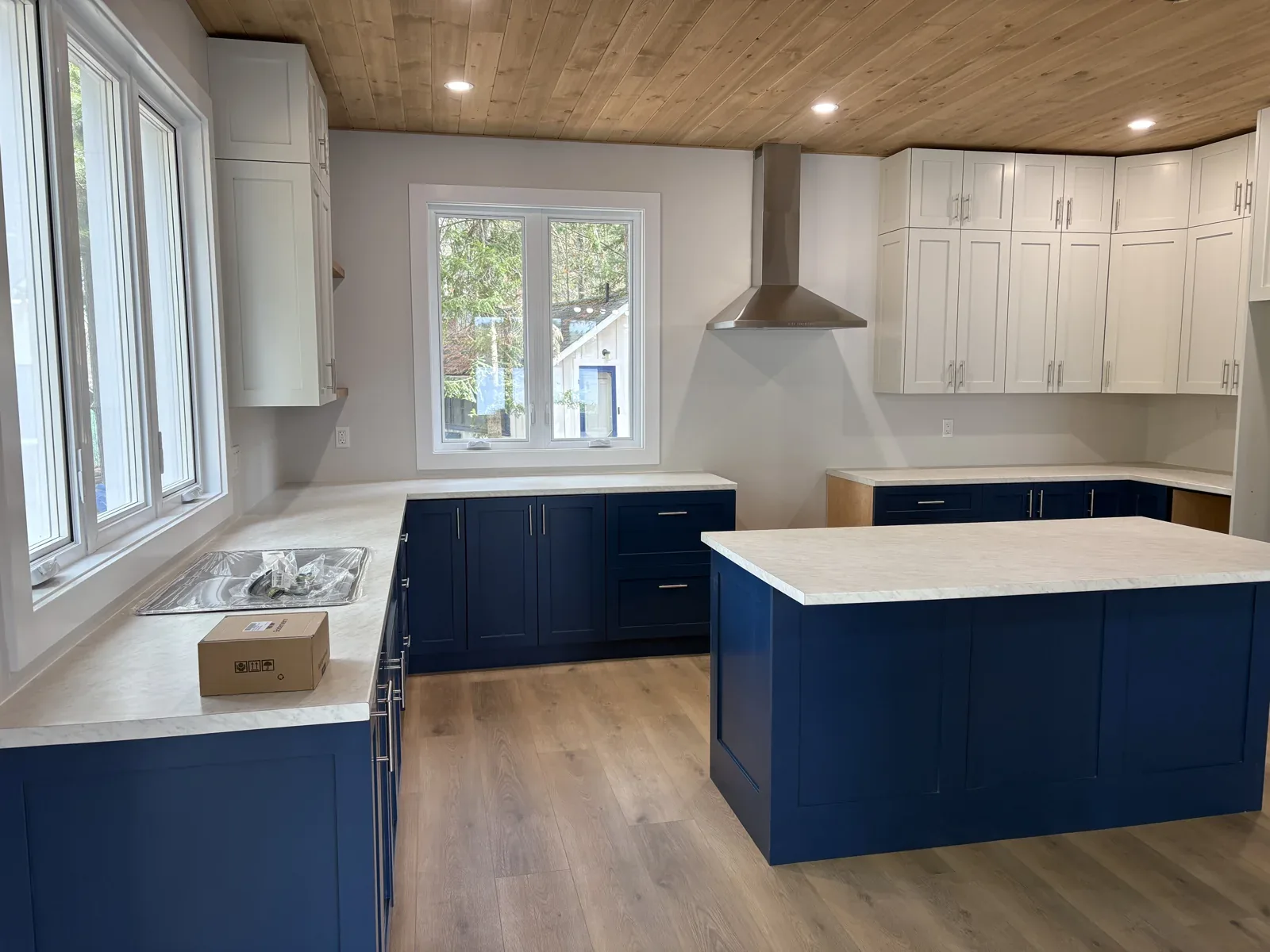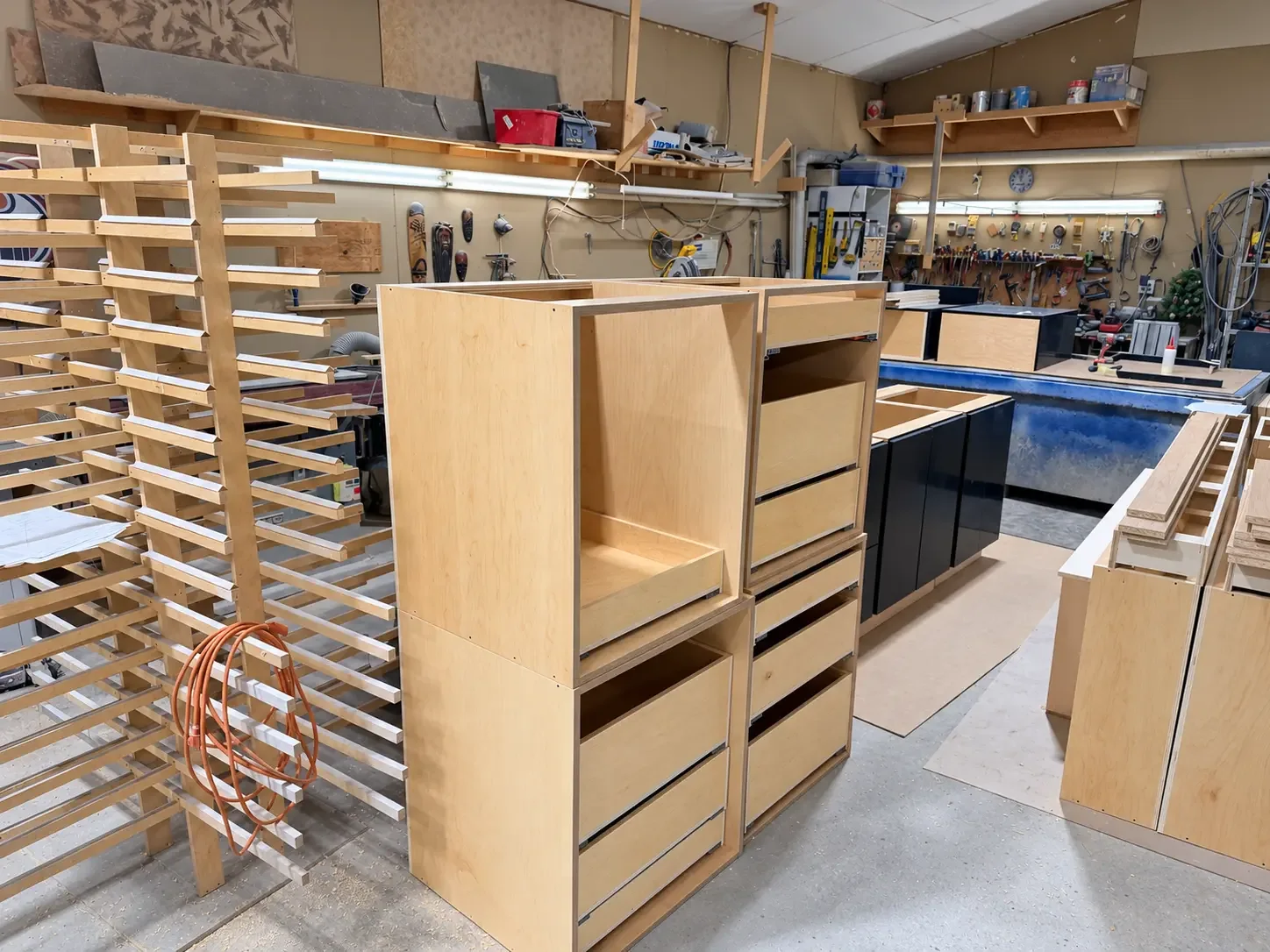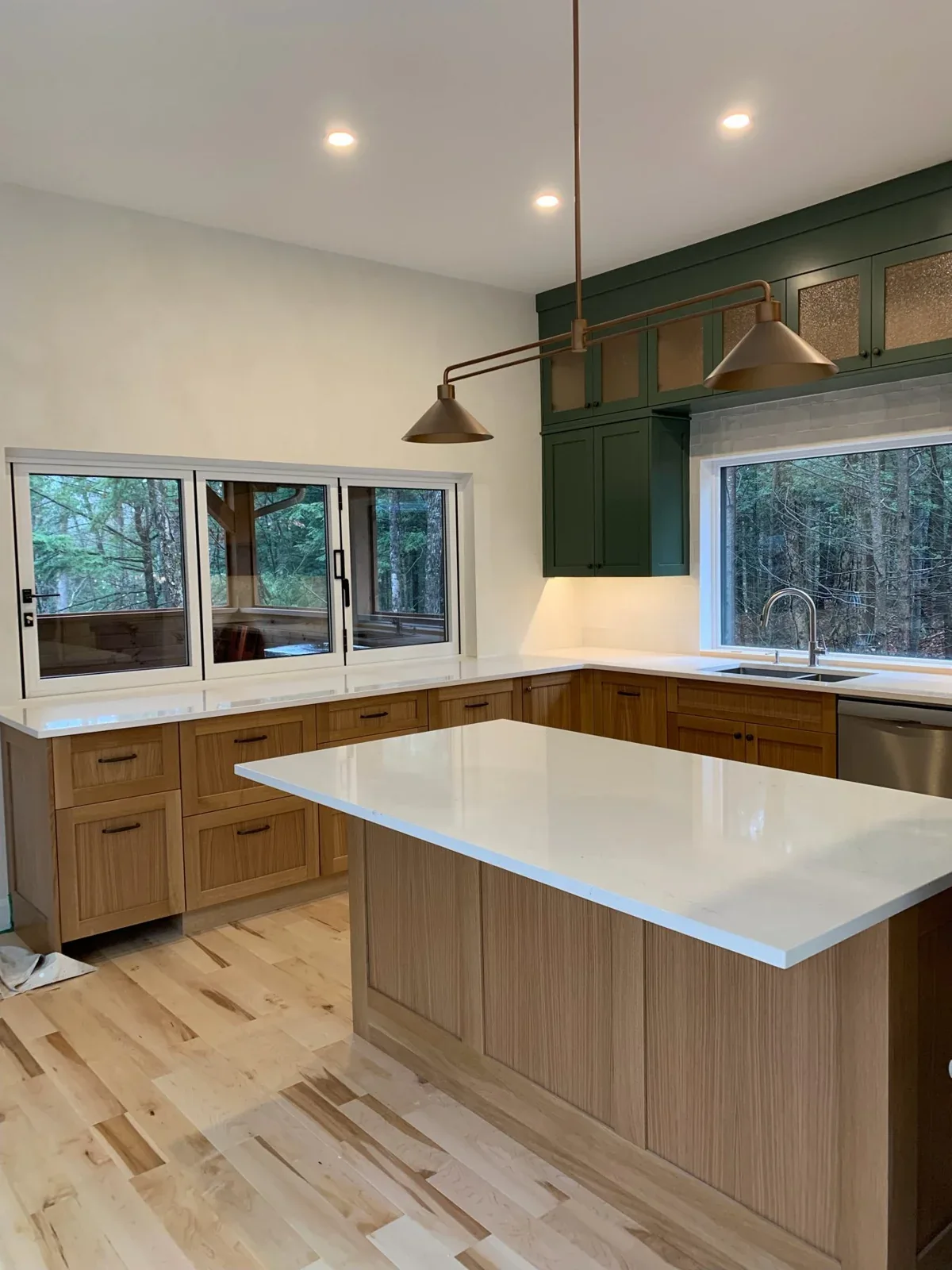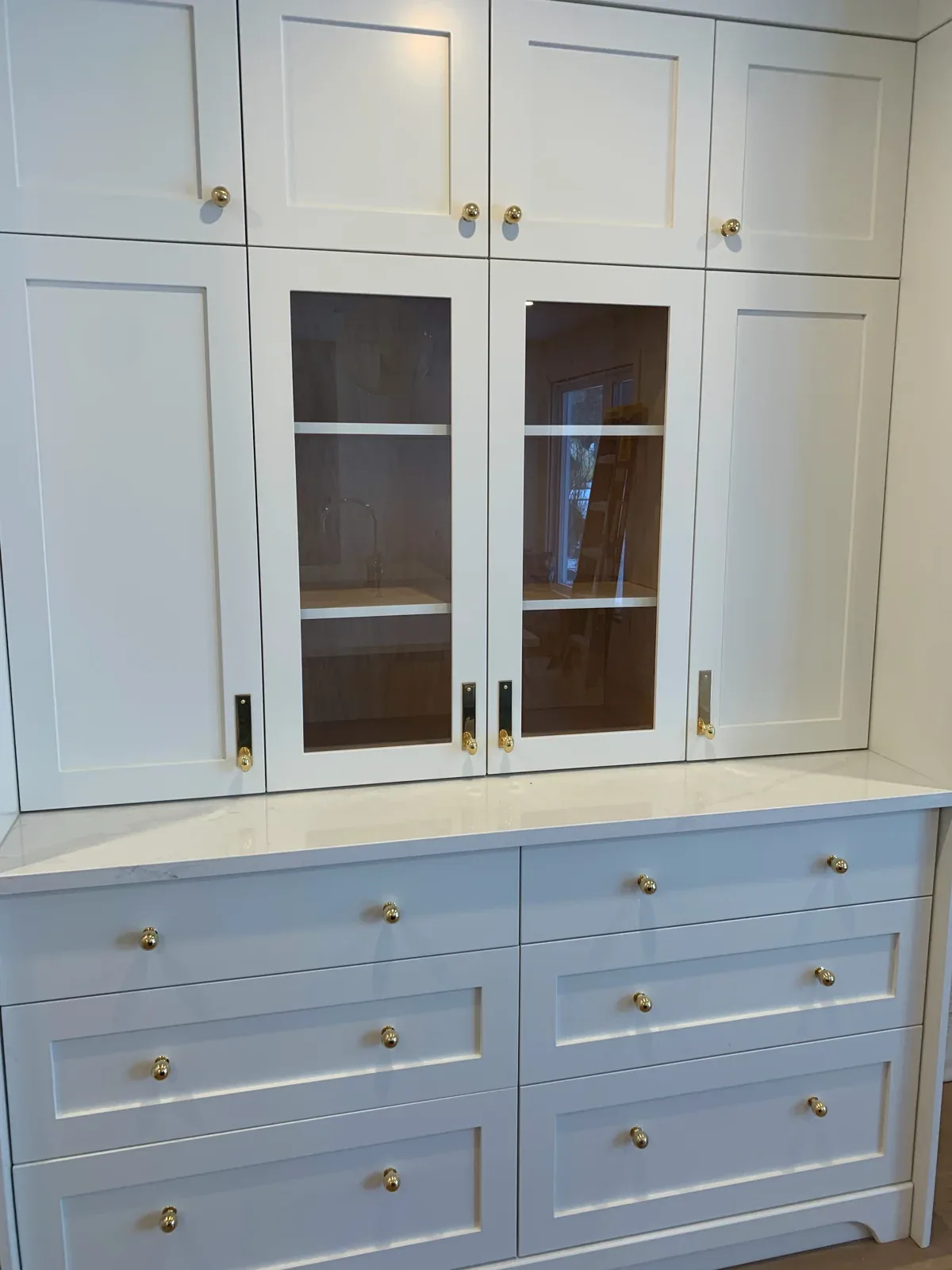
Cabinetry is rarely made from one material throughout. A finished kitchen or built-in may combine different materials in the cabinet boxes, doors, drawer components, shelves and decorative panels. Each part has a job, and the most suitable choice depends on that job as well as the appearance you want.
This can make quotations confusing. Terms such as solid wood, plywood, MDF, veneer and laminate are sometimes used as shorthand for quality, even though the complete construction matters more than a single label. This guide explains how to ask better questions, compare samples and choose a finish that suits the room and your household.
Look at the cabinet as a complete assembly
Start by separating visible surfaces from structural and working components. The doors determine much of the appearance. The cabinet box supports the assembly. Shelves carry contents, drawers move repeatedly and exposed end panels finish the composition. One material does not need to serve every role.
Ask for a specification that identifies the main components rather than a broad promise of “wood cabinets.” What are the boxes made from? What is the door construction? How are exposed edges finished? What material is used for the shelves and drawer bottoms? These questions create a clearer picture of what you are buying.
Also ask how the parts are joined and supported. A named material alone cannot tell you whether a long shelf will remain satisfactory under the intended load or whether a wide drawer is built appropriately. Design, fabrication, hardware and installation all contribute to the result.
Solid wood brings character and variation
Solid wood can provide warmth, visible grain and a sense of material depth. Different species and cuts produce different appearances. Even within one species, boards can vary in colour and grain. That variation may be part of the appeal, but it should be discussed before approval if you prefer a very consistent look.
Wood responds to changes in moisture conditions, so construction needs to accommodate its behaviour. The cabinetmaker chooses appropriate methods for the component and finish. A well-designed assembly considers how its parts work together rather than assuming that making every surface from solid wood is always preferable.
Review a range of samples and ask how boards will be selected. If a specific grain character matters to you, describe it clearly. “Natural oak” can mean different things to different people. Photographs help communicate direction, but a physical sample range is a better basis for discussing acceptable variation.
Veneer is a design material, not just a substitute
Wood veneer is a thin layer of real wood applied to a supporting substrate. It can be useful for broad surfaces and carefully composed grain patterns. The substrate and bonding process are part of the specification, so the word veneer alone does not describe the quality of the finished panel.
Veneer can create a deliberate relationship across neighbouring doors and panels. Ask whether the grain will be matched, arranged continuously or selected with another pattern in mind. These decisions affect the overall composition and should be established before the panels are cut and assigned to their locations.
Look at edge treatment as well as the face. An attractive panel can feel unfinished if the edges do not relate well to it. Ask how repairs would be handled and what cleaning products are appropriate for the finish. Treat a veneered surface according to its actual coating and construction, not a general assumption about wood.
Plywood: ask about the complete specification
Plywood consists of layers of wood bonded together. It is used in many cabinet applications, but the category includes different products and face qualities. A quote that simply says plywood leaves important questions unanswered about appearance, thickness, exposed edges and suitability for the intended use.
Ask where plywood is proposed and why. It may be used for cabinet boxes, shelves or other components. If an edge will remain visible, determine whether it is intended as a design feature or will receive an edge treatment. Inside a cabinet, the surface finish should also be part of the discussion.
Do not compare two proposals solely by whether plywood appears in the description. Compare the complete assembly, including joints, backs, shelf support and hardware attachment. The right question is whether the proposed construction is appropriate and clearly specified, not whether one material name appears more often.
MDF and painted cabinetry
Medium-density fibreboard, commonly called MDF, is an engineered wood product often used in painted cabinetry and decorative components. Its smooth surface can suit certain paint applications and machined profiles. The grade, component design and finishing process all influence how it performs in the finished piece.
Painted doors may combine materials or use a particular construction method chosen for the profile. Ask how the door is made rather than assuming every painted door has the same core. Discuss edges, joints and the intended environment, especially where splashes or frequent handling are expected.
No cabinet material should be treated as permission to ignore standing water or leaks. A moisture-resistant designation, where applicable, is not the same as waterproof construction. Ask for practical care instructions and details around vulnerable locations, including sink areas, floor transitions and exposed edges.
Decorative panels, melamine and laminate
Decorative surfaces can provide consistent colour, texture or wood-like patterns. They may be useful for interiors, doors or other applications depending on the product. The terms melamine and laminate describe different surface systems and should not be treated as interchangeable specifications.
Ask to see a finished edge and corner, not only a flat sample. Edge treatment strongly affects how a panel looks at close range. Discuss texture, sheen and pattern repeat across a large installation. A small square may look convincing while repeated panels reveal a more noticeable pattern.
Consider how damage can be repaired and whether matching material is likely to be available later. Keep the product reference after installation. Consistency can be an advantage, but future matching still depends on the specific surface and supply. A clear record is more useful than remembering that the cabinets were “light oak.”
Paint, stain and clear finishes do different jobs
Paint creates an opaque colour, while stain changes the appearance of wood without necessarily concealing its grain. A clear finish protects and influences the appearance of the underlying material. These choices affect both visual character and the way natural variation remains visible.
Stain samples should be made on the intended wood species and, where relevant, a representative construction. The same named colour can look different on different materials. Paint also needs to be judged as part of the complete finish system, including sheen and surface preparation.
Ask what the approved sample represents and how it will be used during fabrication. Keep a signed or otherwise clearly identified reference where practical. A verbal colour description is too loose for a decision that will cover a large area and sit beside other carefully selected materials.
Sheen changes the way a room reads
Two surfaces in a similar colour can feel different because of sheen. A glossier finish reflects more of the surrounding room and light. A lower-sheen surface can create a quieter impression. The best choice depends on the material, the lighting and your expectations for appearance and maintenance.
View the sample from several angles. Look at it beside a window and under the type of artificial lighting planned for the room. Reflections can emphasize surface conditions that are less noticeable under diffuse light. This is especially useful when choosing dark colours or broad, flat fronts.
Ask how fingerprints, routine marks and cleaning should be handled for the specific finish. Avoid assuming that one sheen is always easier to maintain. Product formulation and use conditions matter. A real sample and clear care instructions provide a better basis than a general rule.
Choose for the room's actual demands
A kitchen, bathroom, mudroom and home office expose cabinetry to different conditions. Cooking residue, splashes, wet boots, cleaning products and repeated contact all influence the specification. Tell the cabinetmaker how the room is used so vulnerable areas can be considered deliberately.
In a mudroom, removable trays and suitable surrounding floor finishes may do more for daily practicality than a decorative cabinet upgrade. In a bathroom, details around the sink and plumbing access matter. In an office, cable routing and the desk's working edge may deserve particular attention.
Think about how the piece will be maintained. Can the interior be wiped easily? Are there narrow grooves that will collect dirt? Can a damaged component be replaced without dismantling the entire installation? The best material choice is part of a broader plan for living with the cabinetry.
Compare quotations on the same basis
Make a simple list of the components and finishes in each proposal. Include boxes, doors, drawer construction, shelves, visible panels, hardware and installation. If the descriptions differ, ask for clarification before deciding that one price represents better value. An omission can look like a saving until it becomes an extra.
Ask which samples and drawings form part of the approval. Clarify whether finishing is completed before installation or whether any site work is included. Discuss exposed ends, interiors and transitions so the expected appearance is consistent throughout the project.
Avoid asking a single material to stand in for workmanship. A well-chosen panel assembled and installed carefully may serve its purpose better than a prestigious material used poorly. The useful comparison is the finished cabinet system, supported by a clear specification and realistic expectations.
Plan for care and future touch-ups
Before the project is complete, request the relevant care information and product references. Ask what cleaners to use, what to avoid and how spills should be handled. If touch-up materials are supplied, label and store them according to their instructions so they remain identifiable.
Inspect spills and leaks promptly rather than expecting a protective finish to make the cabinet immune to water. Use appropriate protection where hot, wet or abrasive objects may contact a surface. Everyday habits can have a large effect on how cabinetry ages, regardless of the material selected.
If damage occurs, identify the finish before attempting a repair. Aggressive sanding, solvents or unsuitable polish can make a small problem more difficult to correct. A photograph and the original specification can help the cabinetmaker recommend an appropriate response.
Build a sample board that answers real questions
Bring the cabinet finish together with flooring, countertop, wall colour and hardware. Keep the samples in their intended orientations where possible: a cabinet door vertical and a countertop horizontal. This helps you judge how light interacts with each surface in the room.
Include a visible edge, not just a centre panel. If the kitchen combines wood and paint, view enough of each to understand the balance. A tiny wood swatch beside a large painted board can misrepresent the proportions of the completed room.
Take your time with the final approval. A material that looks attractive on its own still needs to work with the other surfaces and the architecture. The goal is a coordinated room with suitable construction behind it, rather than a collection of individually impressive samples.
Questions homeowners often ask
Is solid wood always the best choice?
No single material is best for every cabinet component. The intended finish, dimensions, use and construction all matter. Ask why each material is proposed and how it contributes to the complete assembly.
Can a finish sample guarantee an exact wood match?
A sample communicates the intended direction, but natural wood includes variation. Discuss the acceptable range and selection process. For a large installation, viewing several representative pieces is more informative than approving one unusually uniform sample.
What records should I keep?
Keep the approved drawings, material descriptions, finish references, hardware details and care instructions. These records make future adjustments, additions and repairs easier to discuss and reduce reliance on memory.