A mudroom earns its place on an ordinary wet weekday. Boots arrive with slush, coats need somewhere to dry, school bags land by the door and someone is looking for a missing mitten. A successful design handles that moment without requiring everyone to behave like the room is a showroom.
For Ottawa and Gatineau households, entry storage needs to respond to seasonal changes as well as daily traffic. This guide explains how to plan lockers, benches, hooks and closed storage around real routines. The aim is a space that is easy to use and reset, with enough thought given to moisture, movement and the things that rarely look tidy.
Follow the route from the door
Watch how people enter your home. Where do they put a bag down? Where do they remove boots? Does the exterior door open across the place where someone needs to sit? The first few steps inside often determine whether an entry stays organized or becomes a pile of displaced belongings.
Map those actions before arranging cabinets. A bench should be convenient without blocking the door or circulation. Hooks should be reachable from the place where coats come off. Boot storage should not require carrying wet footwear across a finished room. These relationships matter more than a symmetrical drawing.
Include the route back out. People need to gather keys, bags and outerwear without opening several unrelated cupboards. A small landing area for the items that leave the house each day can reduce searching. The best mudroom supports both arrival and departure with the same clear sequence.
Count people, then count their things
One locker per person is a helpful starting idea, but it is not a complete storage plan. A child with a school bag and sports equipment may need a different arrangement from an adult carrying a laptop bag. Guests, pets and shared household items also need consideration.
Make a seasonal inventory. List everyday coats, footwear, helmets, gloves, reusable bags and equipment that genuinely belongs near the entrance. Separate daily items from occasional ones. Storing every winter coat at the busiest entry can overwhelm the space even when only a few are regularly used.
Measure bulky objects. A hockey bag, tall boot or large backpack can dictate a compartment size that a generic cubby would not accommodate. Bring those dimensions to the design conversation. It is easier to create one useful equipment bay than to discover after installation that the largest item still lives on the floor.
Design a bench for the act of sitting
A bench is working furniture, not just a horizontal line in an elevation. Its height, depth and available space should suit the people using it. Consider whether someone can sit comfortably, lean forward to handle footwear and stand again without contacting a projecting hook or cabinet edge.
Decide whether the bench will remain clear. If it is the only place to put bags down, it may rarely be available for sitting. A separate landing shelf or designated bag compartment can protect its function. The room should not depend on the same small surface doing two incompatible jobs at once.
Storage beneath the bench can be valuable, but choose the access method carefully. Open space is quick to use; drawers conceal contents; a lift-up seat requires the top to be clear. Think through the daily sequence before selecting the mechanism. The most elegant solution is the one the household will actually use.
Make wet footwear easy to manage
Boots bring water, salt and grit into the entry. Give them a deliberate place to land, with removable trays or another suitable arrangement that can be cleaned. The surrounding materials and details should be selected with that use in mind rather than relying on careful behaviour every time someone comes home.
Allow room for the footwear you really own. Tall winter boots, children's shoes and everyday sneakers need different clearances. An open lower bay may handle wet arrivals, while separate storage holds dry footwear. Cramming everything into one tightly packed compartment makes cleaning and retrieval harder.
Avoid treating cabinetry as a drying appliance. Damp items need an appropriate place to dry, and enclosed storage should not be expected to solve moisture on its own. Discuss ventilation and surrounding conditions with the designer, and keep water from pooling against cabinet edges or adjacent finishes.
Hooks work best when people can reach them
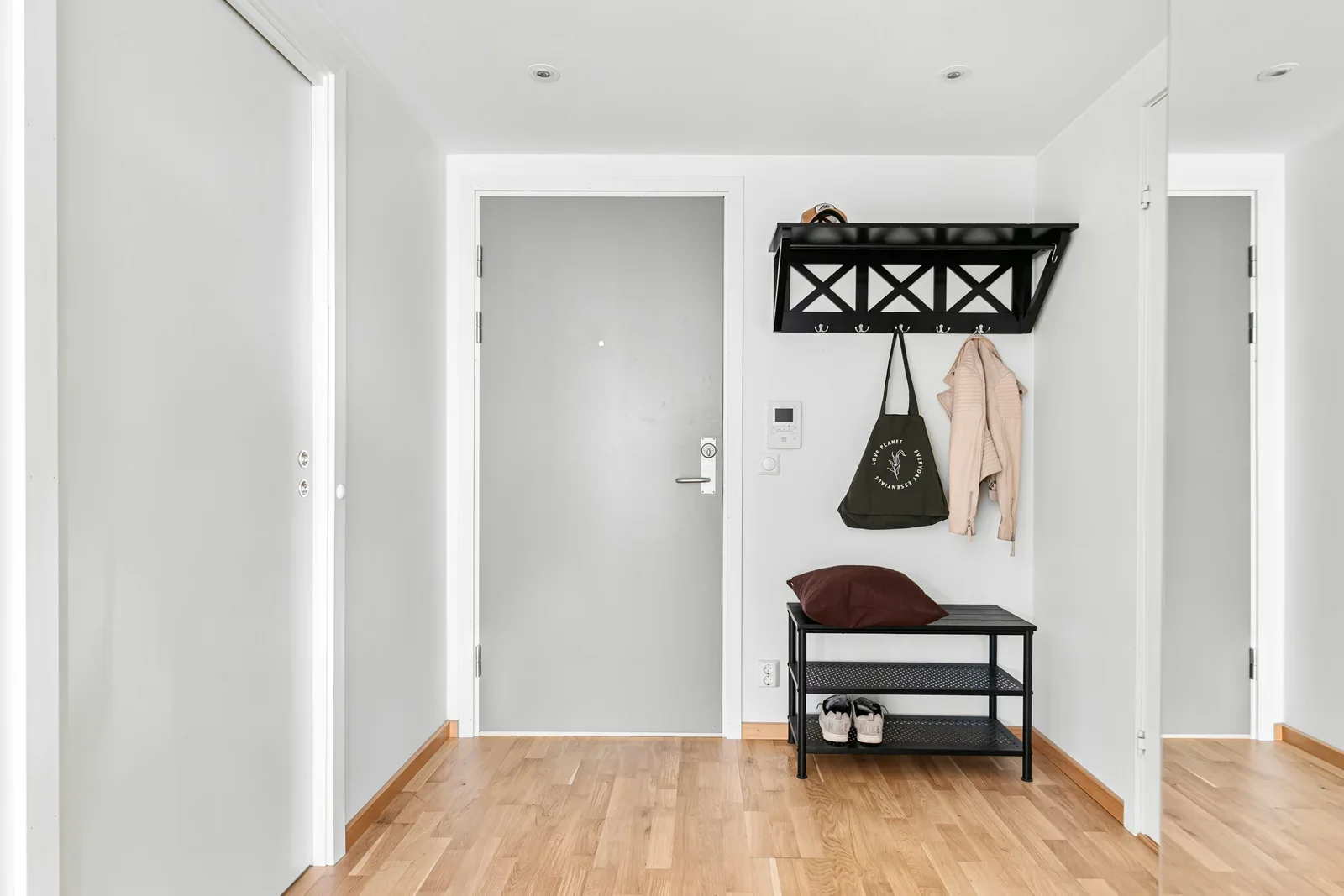
Hooks are often easier to use than hangers during a busy arrival. Their usefulness depends on height, spacing and projection. Place them for the people who will use them, including children where appropriate, and consider how a hanging coat occupies space below and beside the hook.
A row that looks generous when empty may feel crowded once heavy coats are in place. Think in three dimensions. Coats overlap, bags project forward and scarves can hide smaller items. Test the arrangement with actual outerwear if the proposed bay is compact.
Choose fittings suited to their intended loads and ensure they are fixed appropriately. Decorative appearance is only one part of the decision. A well-positioned, secure hook encourages the simple habit of putting a coat away immediately, which is more useful than an elaborate storage system that takes several steps to use.
Balance open lockers with closed storage
Open bays make everyday items visible and quick to reach. They can also make a busy family entry look busy. Closed cabinets provide visual calm but require a door to be opened each time something is put away. A combination often works well because different contents benefit from different levels of access.
Reserve the easiest locations for daily use. Higher or less accessible closed storage can hold seasonal accessories, spare supplies or items used occasionally. Avoid putting the everyday mittens in a place that requires an adult to retrieve them each morning if children could manage them independently elsewhere.
Think about what you want to see from adjoining rooms. A mudroom directly visible from the kitchen may benefit from more closed storage than a separate utility entry. The right balance comes from the room's role in the home, not a universal ratio of doors to open shelves.
Give small items a reliable home
Keys, gloves, sunglasses and dog leads are small enough to disappear but important enough to delay everyone. Assign them shallow, specific storage near the exit. A small drawer, accessible basket or dedicated hook can be more useful than a large undivided cupboard.
Keep the system understandable. If every family member must remember a complicated arrangement, it will be hard to maintain. Labels can help children, but the storage should also make intuitive sense through location. Gloves belong near coats; keys belong near the route out.
Plan a place for things temporarily passing through the house, such as a library book or an item to return. Without a defined landing spot, these objects spread across the bench and undermine the whole arrangement. A modest outgoing tray can keep temporary clutter from becoming permanent.
Plan for bags and sports equipment separately
Backpacks and equipment bags often need more depth than coats. Putting them in the same narrow locker can block hooks and consume the seat. Consider a lower bag shelf, a wider shared bay or storage in an adjoining area for bulky equipment used only on certain days.
Be realistic about what should remain at the main entry. A small mudroom may handle daily school bags beautifully while larger sports gear belongs in a garage or utility area. Good planning includes deciding what not to store in the busiest circulation space.
For equipment that arrives damp or dirty, provide a suitable cleaning and drying routine outside enclosed cabinetry where needed. The cabinet design should support that routine rather than hide an unresolved problem. A clear division between wet arrivals and clean stored items makes the room easier to maintain.
Choose materials around the difficult areas
The lower part of a mudroom takes more abuse than the upper cabinets. Boots, bags, vacuum cleaners and pets may contact it repeatedly. Discuss edge details, finishes and replaceable protective elements at those locations. A material selected only for its appearance may not be the most practical choice everywhere.
Bench tops need attention too. They are sat on, used as landing surfaces and sometimes exposed to damp clothing. Ask how the chosen finish should be cleaned and whether cushions are appropriate for the household. A cushion is comfortable only if its care requirements suit the way the entry is used.
Do not overlook adjacent flooring and wall finishes. Cabinetry is one part of the room's response to dirt and moisture. Removable mats, accessible cleaning space and a sensible transition at the doorway help protect the entire entry, not just the cabinet fronts.
Make a small entry feel organized
In a compact hallway, depth is often more important than total cabinet width. A deep storage unit can reduce the passage enough to make the whole entry awkward. Shallow storage, a modest bench and carefully placed hooks may serve better than full-depth lockers.
Preserve door swings and access to adjacent rooms. Consider handles, hanging coats and bags as part of the occupied depth. A cabinet that fits perfectly when empty can project much farther once it is being used. Review the furnished condition rather than only the millwork outline.
Use vertical space selectively. Higher shelves can store occasional items, while the reachable area remains available for daily use. Keep the visual arrangement calm through consistent lines and a limited palette. Organization comes from clear places for belongings, not from adding as many compartments as possible.
Test the design on a busy morning
Imagine two people entering while another is trying to leave. One person sits to put on boots, a bag is set down and the door opens. Can each action happen without someone moving a pile of belongings? This exercise reveals whether the design has enough working space between its storage elements.
Next, imagine cleaning the room. Can trays be removed, corners reached and the floor washed without dismantling a system? Are the most frequently dirty surfaces easy to access? A mudroom that is simple to reset is more likely to remain pleasant through a long winter.
Finally, review the seasonal change. Decide where winter accessories will go in summer and what replaces them. Adjustable shelves and movable baskets can accommodate those changes without new cabinetry. A flexible arrangement gives the room a useful rhythm throughout the year.
Questions homeowners often ask
Do we need a separate locker for every person?
Not necessarily. Individual bays can be helpful, but shared storage may use a small space more effectively. Base the arrangement on quantities, routines and available width. Personal ownership is useful only if the compartments are large enough for the intended belongings.
Are closed doors better for hiding clutter?
They conceal contents, but they add a step to every arrival and departure. Use them where that trade-off makes sense. Open daily storage combined with closed occasional storage can be easier to maintain than either approach alone.
What should we bring to a design meeting?
Bring photos of the entry in normal use, approximate room dimensions and measurements of the largest bags and boots. Include a list of the daily frustrations. A realistic picture of the room is more useful than tidying away the evidence before discussing it.